Basque coastLegal / Logistics
Marrying on both sides of the border
Civil ceremonies, paperwork, and guest logistics for destination weddings that sit between France and Spain on the Basque coast.
Published Updated
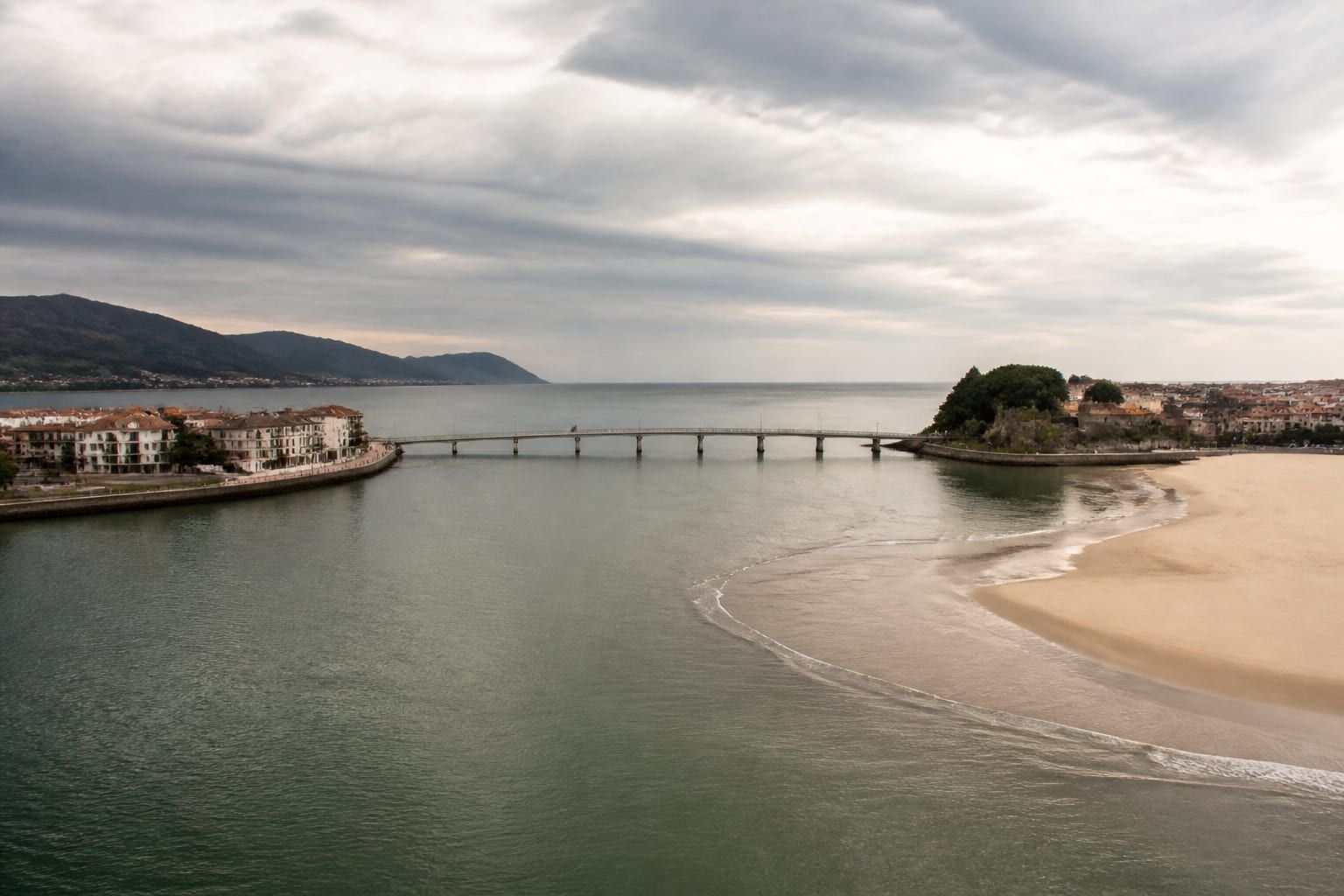
The Basque coast is one destination that happens to contain a border. Couples use that as a feature: a French mairie in the morning, a Spanish dinner, guests flying into BIQ and EAS in the same weekend. It works. It also produces a particular kind of paperwork, and a particular kind of Saturday traffic.
This guide is orientation, not legal advice. Town halls change appointments. Embassies change document lists. Confirm everything with the mairie or ayuntamiento that will actually marry you.
Most international couples do not get legally married in France, and it changes nothing about the wedding they hold here. They sign at home, then have the ceremony, vows, and dinner on this coast.
Civil marriage in France
A legal French marriage happens at the mairie, not in a garden. Religious or outdoor ceremonies have no legal standing on their own. To marry in a given commune, the law wants a real connection to that town: in practice, a partner or a parent resident there, with roughly a month of continuous residence before the file is accepted, then the publication of banns for 10 days.
On top of residence, the file takes time: recent birth certificates, sworn translations, proof of civil status, sometimes a certificat de coutume from a consulate. Processing runs weeks to months. Each mairie interprets the rules. Start six months out if you are even considering this path. Start earlier if a previous marriage needs dissolving on paper.
For a couple flying in from New York or London for a wedding week, none of this fits. That is why most visiting couples marry legally at home (a registry office, two witnesses, or a small first celebration) and hold the ceremony here. A bilingual celebrant runs the day. Nothing to file in France. A marriage validly concluded in your home country is recognised here and across the EU.
The ceremony at the mairie, if you do it, is short and in French. You may bring an interpreter. The sentimental ceremony (the one with the view) is a separate event, and the venue will treat it as one. Saint-Jean-de-Luz and Biarritz both have mairies used to visitors. Appointments in June and September go early.
The legal French route exists for the right situations: one of you lives in France, or your parents do, and that commune’s mairie is the civil venue; or you can genuinely relocate for a month-plus of documented residence, then the banns, then the act. Couples with flexible remote work occasionally do this and treat it as an extended stay. Budget several months from first contact to the date. The mairie’s reading of the file is the one that counts.
Because the legal act and the ceremony can be decoupled, a symbolic date on this coast is yours to choose. No mairie calendar, no banns window. The only availability that matters is the venue’s.
Civil marriage in Spain
Spanish civil marriages can be more flexible in setting, depending on the municipality. They are not a shortcut for visitors. Spain requires that at least one partner be a Spanish citizen or legal resident, and the expediente matrimonial takes months. San Sebastián and Hondarribia are accustomed to non-resident couples, especially those with a Spanish or EU connection. The file still wants certificates, a registro civil process, and patience.
Catholic religious marriage in Spain can have legal effect, with its own documentary path through the diocese. For visiting couples, marrying legally at home and holding only a symbolic ceremony here is often the cleanest path, and it is not a lesser wedding. It applies on both sides of the border.
If one of you is Spanish, say so immediately. The path changes.
Guests, airports, and the border
Treat the weekend as a small region, not two countries. Biarritz-Pays Basque (BIQ) serves the French towns. San Sebastián (EAS) sits in Hondarribia. Bilbao (BIO) is the long-haul airport. Hendaye TGV brings Paris. A guest list split between France and Spain should be told, in the invitation, which airport to use and where to sleep.
August Saturdays clog the border. A coach from a Biarritz hotel to a Hondarribia lunch needs a timetable with slack. Your planner, if they are local, already knows which lane to avoid.
Language, money, and the small things
French towns take the euro and mostly take cards. Spanish towns do too. Guests still ask. Put a short logistics note in the wedding website: sockets, Sunday shop hours, the fact that a Basque restaurant at 8pm is early, and that some of the best rooms do not look like hotels on a map.
If you want introductions to planners who have filed these papers before, that is a reasonable first email. Include nationality, where you want the legal ceremony, and whether the dinner can be in the other country. The rest follows.
Questions we are asked
Can we have a legal ceremony on a terrace in Biarritz?
In France, the civil marriage must take place at the mairie, and only if a partner or parent has a real residential connection to that commune. A terrace blessing or symbolic ceremony can follow. Most visiting couples marry legally at home and hold the ceremony here.
Can tourists legally marry in France?
In practice, rarely. The file wants roughly a month of residence in the commune by a partner or a parent, then 10 days of banns, plus certificates, translations, and time. Most international couples marry at home and celebrate on the coast.
Is a symbolic ceremony in France legally binding?
No, and that is the point. You complete the legal marriage in your home country, then hold the ceremony here with an officiant, vows, and guests. Guests generally cannot tell the difference unless you tell them.
Is it easier to marry legally on the Spanish side?
Not for non-residents. Spain wants at least one partner to be a Spanish citizen or legal resident. The marry-at-home approach applies on both sides of the border.
Will a home-country marriage be recognised in France?
A marriage validly performed in your home country is recognised in France and across the EU. Check your own country's rules if you marry in France instead.
How long should guests allow between Biarritz and San Sebastián?
Forty-five to seventy minutes by car, depending on the border and summer traffic. Coaches need to be booked early in August. The AP-8 and the coastal road are different journeys; your planner will choose.
If this sounds like your wedding
Send the outline. We read every note and reply within 24 hours.
Thank you. We have the note.
Expect a reply within 24 hours, usually with a few clarifying questions and a first shortlist. If you do not see it, check spam or write to hello@basquecoastweddings.com.