Basque coastVenues / Planning
Biarritz vs San Sebastián, which side of the border
A comparison of Biarritz and San Sebastián for a destination wedding, covering atmosphere, food, guest travel, and the paperwork that does not change on either side.
Published Updated
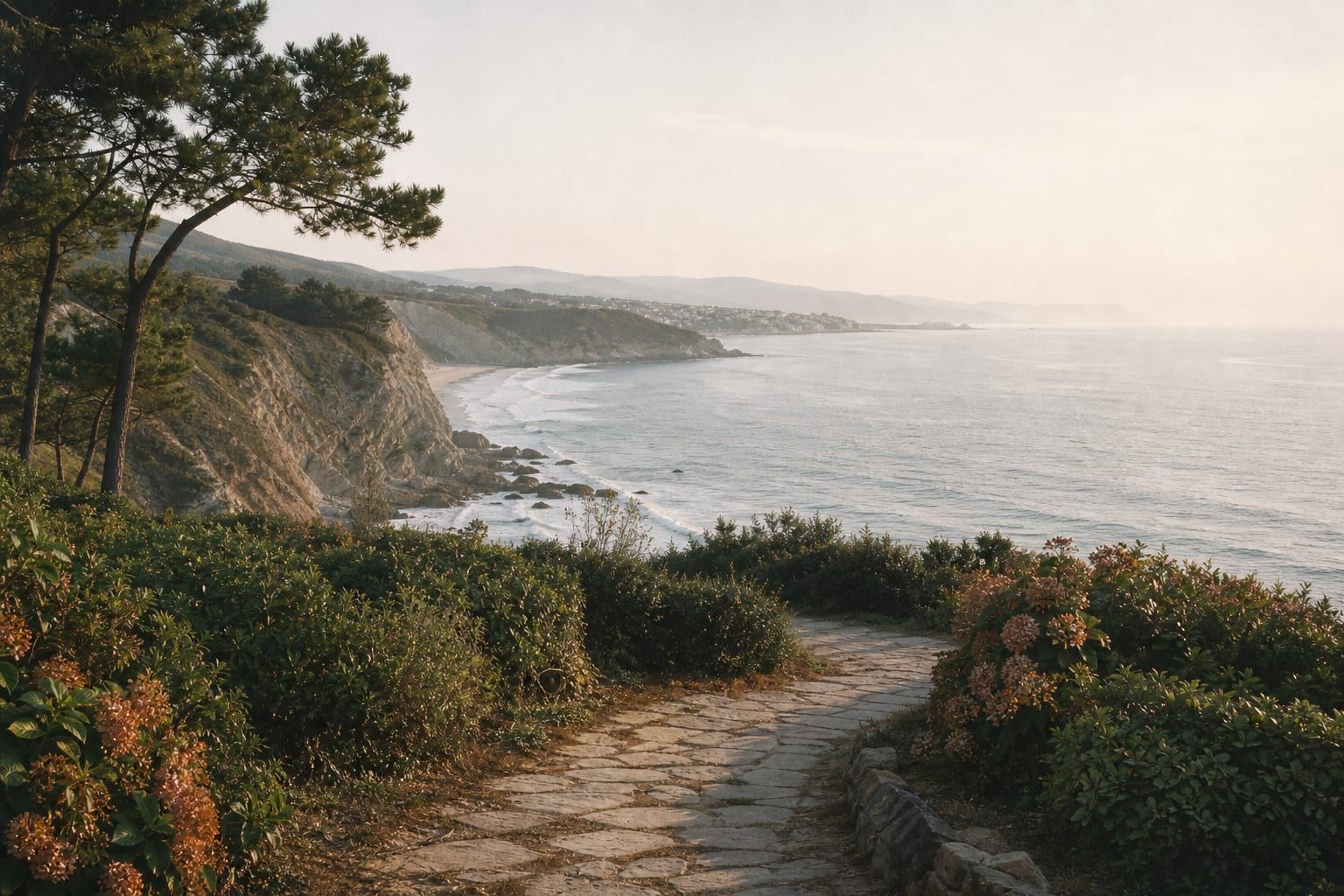
Couples write to us with a Pinterest board split between a French palace hotel and a Spanish pintxo bar, as if the two towns were rivals. They are not. Biarritz and San Sebastián sit about 48 kilometres apart on the same coastline, in two countries that share a language older than either. The choice is less where to marry and more which version of this coast you want in the photographs.
Two towns, one coast
Biarritz is French, a former Belle Époque resort with a population of about 25,800. San Sebastián, called Donostia in Basque, is Spanish and considerably larger, with roughly 188,000 residents in the city itself. One feels like a seaside town that scaled up for the 19th-century aristocracy. The other feels like a small city that happens to have three excellent beaches. Neither is a village, and neither needs an introduction to the people who already love this coast.
Choose Biarritz for the room
Biarritz was built around hotels: the Hôtel du Palais, raised for Napoleon III and Empress Eugénie, still anchors the seafront with a ballroom over the ocean. Beyond the hotels, a belt of villas and châteaux in the hills toward Bidart and Arcangues gives couples a private estate within ten minutes of town. If the wedding wants a grand room, a private takeover, or a beach at the end of the aisle for photographs, Biarritz has more of that kind of address, and more of it that is genuinely bookable for a weekend.
Biarritz also carries a specific identity beyond the hotels: European surfing arrived here in 1957, when the American screenwriter Peter Viertel brought a board to the Côte des Basques while working on a film. The town has run surf competitions on its beaches for more than 60 years. That heritage shows up in the light and the pace, not usually in the wedding itself.
Choose San Sebastián for the table
San Sebastián is a serious food city before it is anything else. The area within 25 kilometres of the centre holds 19 Michelin stars, including three restaurants at the top rating: Arzak, Akelarre, and Martín Berasategui. Outside the tasting menus, the Parte Vieja is built for pintxos: small plates, standing room, moving between four or five bars in an evening. A wedding weekend here can lean into that instead of a single seated dinner, with a rehearsal night that is really a pintxos crawl.
The city is also more urban than Biarritz, with hotel stock to match: guests who want a proper city break either side of the wedding, with shops, a Belle Époque old town, and the Concha beach in its full crescent, are better served here.
Getting guests there
The drive between the two centres is about 48 kilometres, roughly 34 minutes without traffic, longer on an August Saturday when the border crossing backs up. A train runs from Biarritz to Hendaye, then on to San Sebastián’s Amara station, in about 1 hour 35 minutes with a change. For a split-country wedding weekend, tell guests in the invitation which airport to book: BIQ for the French side, EAS for the Spanish side and its Madrid and Barcelona connections, or Bilbao’s BIO for long-haul arrivals from outside Europe. A shuttle or coach timetable, built with slack for summer traffic, does more for the day than any other single logistics decision.
Paperwork does not favour either side
Neither country makes it simple for visitors. France wants a real residential connection to the commune, roughly a month of it, before a civil marriage. Spain wants a citizen or legal resident as one of the partners. Most international couples marry legally at home, a registry office or a courthouse before they travel, and hold the ceremony and dinner here, on whichever side fits the rest of the weekend. That decision does not need to track the venue decision.
How to decide
Start with the guest list and the kind of Saturday you want, not the map. A French address gives you the grand-hotel version of this coast and the deepest bench of takeover estates. A Spanish address gives you a bigger city, a shorter walk to the world’s most concentrated stretch of Michelin stars outside Kyoto, and hotels built for a weekend of guests who are not all sleeping on the same property.
Some couples solve it by using both: a morning on one side, a dinner on the other, and a coach in between. Say which pull is stronger when you write to us, France or Spain or genuinely either, and we will shape the introductions around that rather than the border.
Questions we are asked
Is San Sebastián cheaper than Biarritz for a wedding?
Not reliably. Hotel palaces on the Concha can match or exceed Biarritz prices, and Gipuzkoa has fewer large-capacity estates than the French side. Catering per head often runs lower in Spain. Compare the specific room, not the country.
Can we split the wedding across both towns?
Yes, and some couples do. A ceremony or civil appointment on one side and a dinner on the other is common here, with 34 minutes of driving between the two centres. Build in slack for August border traffic.
Which town has better weather for a wedding?
Both sit on the same stretch of Atlantic and the difference is small. Biarritz averages about a degree warmer in summer, San Sebastián a little cooler and slightly less rain in July and August. Neither is a dry-season destination.
Which airport should our guests use?
Biarritz-Pays Basque (BIQ) serves the French side with direct flights from Paris and seasonal European routes. San Sebastián airport (EAS), which sits in Hondarribia, connects mainly through Madrid and Barcelona. Bilbao (BIO), about 90 minutes from San Sebastián, is the long-haul option for both.
Is it easier to get legally married on one side of the border?
No. France requires a residential connection to the commune, and Spain requires a Spanish citizen or resident partner. Most international couples marry legally at home and hold the ceremony here, whichever side they choose. See our guide to marrying on both sides of the border for the detail.
Do couples pay Basque Coast Weddings to help decide?
No. Tell us what is pulling you toward each side and we introduce you to planners and venues that fit. The introduction is free for couples; vendors pay us if you book.
If this sounds like your wedding
Send the outline. We read every note and reply within 24 hours.
Thank you. We have the note.
Expect a reply within 24 hours, usually with a few clarifying questions and a first shortlist. If you do not see it, check spam or write to hello@basquecoastweddings.com.